• Skip to Content
  • Skip to Main Navigation
  • Skip to Search

The College of Arts & Sciences

Department of Biology

  • Home
  • About
    • Message from the Chair
    • Faculty
    • Research Associates & Postdocs
    • Staff
    • Graduate Students
    • Administration
    • Offices & Centers
    • Outreach
    • History
    • About Bloomington
  • Undergraduate
    • Biology
    • Biotechnology
    • Microbiology
    • Molecular Life Sciences
    • Research & Teaching Opportunities
    • Honors Program
    • Advising
    • Awards & Scholarships
    • Student Experience
    • Graduate & Professional Program Preparation
    • Career Preparation
  • Graduate
    • Evolution, Ecology, and Behavior Ph.D.
    • Genome, Cell, and Developmental Biology Ph.D.
    • Microbiology Ph.D.
    • Biotechnology M.S.
    • Multidisciplinary & Affiliated Programs
    • Advising
    • Financial Support
    • Awards & Fellowships
    • Life Assistance
    • Career Preparation
    • Alumni Career Spotlights
    • How to Apply
  • Research
    • Research Faculty
    • Associated Research Faculty
    • Research Strengths
    • Centers, Instrumentation, & Resources
    • Faculty Awards
  • News & Events
    • News
    • Events Calendar
    • Seminars
    • Named Lectures
    • Discussion Groups & Journal Clubs
    • Annual Microbiology Retreat
    • Newsletters
  • Alumni & Giving
  • Search
  • Contact
  • Student Portal
  • Donate
  • News
  • Events Calendar
  • Seminars
  • Named Lectures
  • Discussion Groups & Journal Clubs
  • Annual Microbiology Retreat
  • Newsletters
  • Home
  • News & Events
  • News
  • 2025 News
  • ‘Coral corral’ and award-winning startup help IU researchers attack antibiotic resistance

‘Coral corral’ and award-winning startup help IU researchers attack antibiotic resistance

Thursday, December 18, 2025

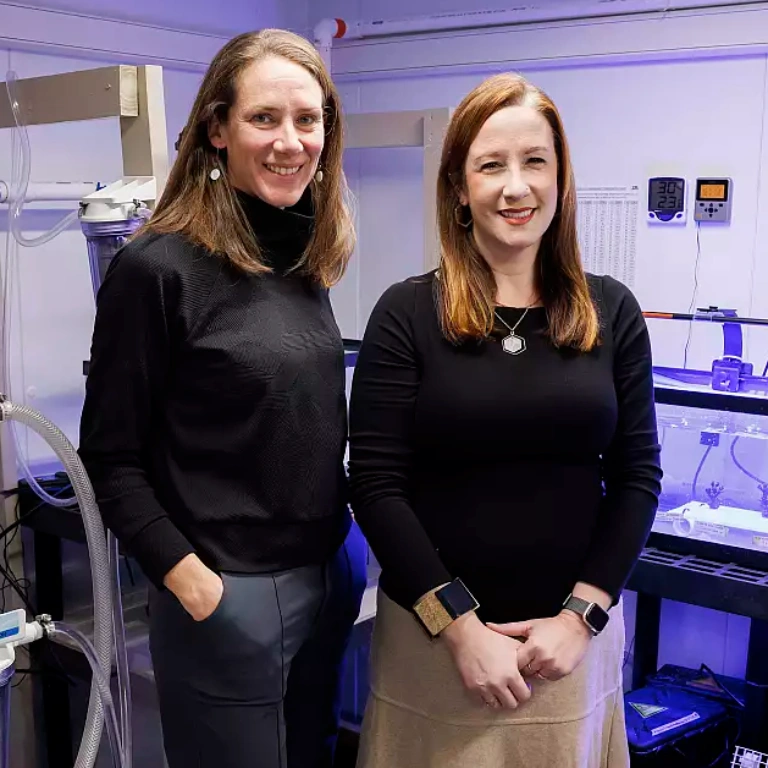
Indiana University's “coral corral” is maintained by associate professor of biology Julia van Kessel, right. She and her startup cofounder, teaching professor of chemistry Laura Brown, left, use the lab to teach IU students and the public about the challenges facing coral worldwide. Photo by James Brosher, Indiana University

Written by IU Storyteller Christiane Wisehart for News at IU.

In the basement of the Biology Building on the landlocked Indiana University Bloomington campus, two scientists are using small corals growing in a tank of salt water to fight antibiotic resistance, which causes an estimated 2.8 million treatment-resistant infections and 35,000 deaths in the U.S. every year, according to the Centers for Disease Control and Prevention.

“A bunch of the corals died last week, which is why we only have three today,” said Julia van Kessel, associate professor of biology in the College of Arts and Sciences, who set up the coral lab or “coral corral” with National Science Foundation funding in 2022.

To survive, coral need an exquisitely balanced ecosystem. Anything from the stress of shipment to the pH balance of the water can kill coral, so van Kessel and her team carefully and continuously monitor the lab to ensure the coral’s survival.

It’s this very sensitivity that makes the study of coral disease attractive to van Kessel. She focuses on coral pathogens because oceans are in the middle of a mass coral reef die-off. Coral reefs play many important roles in marine life, such as acting as a water filtration system, providing habitat for seafood and supplying many important medicinal compounds. Because of the stakes and scale of the problem, it’s also an appealing project for undergraduates who might want to explore the world of scientific research.

Interrupting infection

In addition to setting up her coral lab, van Kessel cofounded a startup company with her collaborator, teaching professor of Chemistry Laura Brown. The company, Quornix, was created in 2023 to bring innovative infection-fighting molecules to market through the study of “quorum sensing,” or the way bacteria communicate. They’re particularly interested in exploring quorum sensing in Vibrio, a marine pathogen that can kill coral as well as fish, shrimp, oysters and even humans.

Bacteria sense the presence of other bacteria by counting the small molecules they emit. When bacteria sense enough of these small molecules around them, they cause an infection. 

“Disease is a nutritional strategy; Vibrio are trying to get nutrients from cells they’re infecting,” van Kessel said. “If you were a bacterium and your goal was to cause disease, would you do it by yourself or wait until you had a bunch of friends around to help you? You wouldn’t want to do it alone, because that requires too much energy.”

Van Kessel hypothesizes that by interrupting quorum sensing in bacteria, infection could be treated or prevented without the use of antibiotics. Using research conducted by Brown’s Arts and Sciences Undergraduate Research Experience course, van Kessel and Brown experiment with chemical compounds that might inhibit Vibrio’s ability to talk to each other. If quorum sensing is successfully disrupted, the bacteria aren’t killed; they just think they’re alone and don’t turn on the genes that cause an infection.

Semester by semester, Brown’s students contribute compounds to test on Vibrio infections. Brown and van Kessel said they value the education that undergraduates get from researching real-world problems. 

“We’re teaching students how to do chemistry, how to do research, how to do biology, so we’re taking the slow approach,” van Kessel said. “But by doing that, we’re getting a lot of value out of the basic scientific research. We’re asking important questions without necessarily knowing what the application will be. But that basic scientific inquiry is important because it sets the stage for major breakthroughs.”

While fighting disease in coral is slow-going, Quornix has made significant progress using quorum-sensing disruption in Vibrio that attack shrimp.

Quornix’s general manager is IU alumna Chelsea Simpson. Her passion for translational science comes out in her love for both the business and science sides of working for a biotech startup. In addition to managing the company’s day-to-day operations, she also serves as its principal investigator, conducting research on Vibrio infection in shrimp.

Shrimp are an increasingly vital source of inexpensive protein for people around the world. Unfortunately, shrimp farmers typically lose about 40% of the crop yield to disease every year.

“Infected shrimp cost the aquaculture industry around $4 billion a year,” Simpson said. “Farmers aren’t just losing out on profit from the devastated crop of shrimp; they’re also losing out on the resources they put toward setting up the ponds where the shrimp hatch.”

In addition to working toward solutions to fight Vibrio infection, Quornix’s leaders hope to apply their therapeutics to other important aquaculture species and, eventually, to humans. For their work developing therapeutic technologies to treat infected shrimp and their potential applications for other marine species and human health, the company recently won the 2025 Cade Prize for Inventivity’s environmental award and Grand Prize.

From biosciences to business

The young startup gets boosts not only from prizes like this, but from a more local source: students from a course in the Kelley School of Business’ Certificate in the Business of Life Sciences. Each semester, senior lecturer George Telthorst chooses a local bioscience startup to work with undergraduate and graduate students in his “The Life Sciences Industry from Research to Patient” class.

He decided to work with Quornix this semester, and students will present possible solutions to business and marketing problems laid out by van Kessel, Brown and Simpson. Having completed the course and the certificate herself in 2024, Simpson saw it as a win-win: Quornix would receive some much-needed guidance and fresh perspective, while the students would get their hands dirty with a real-world company tackling real-world problems.

Whether it’s the students in the Kelley class or the research experience class, van Kessel and Brown said they both love working with undergraduates at IU.

“Research was a formative experience for me when I was an undergrad, and that’s why I made it a priority to bring it to more students here,” Brown said. “It’s fun working with students because you tell them that their experiments might save the world, and they get so fired up about tackling research problems.

“Some of these projects go on for years, so it’s inspiring to see that enthusiasm with each new group of students. That’s what we’re working toward and that’s what keeps us enthusiastic.”
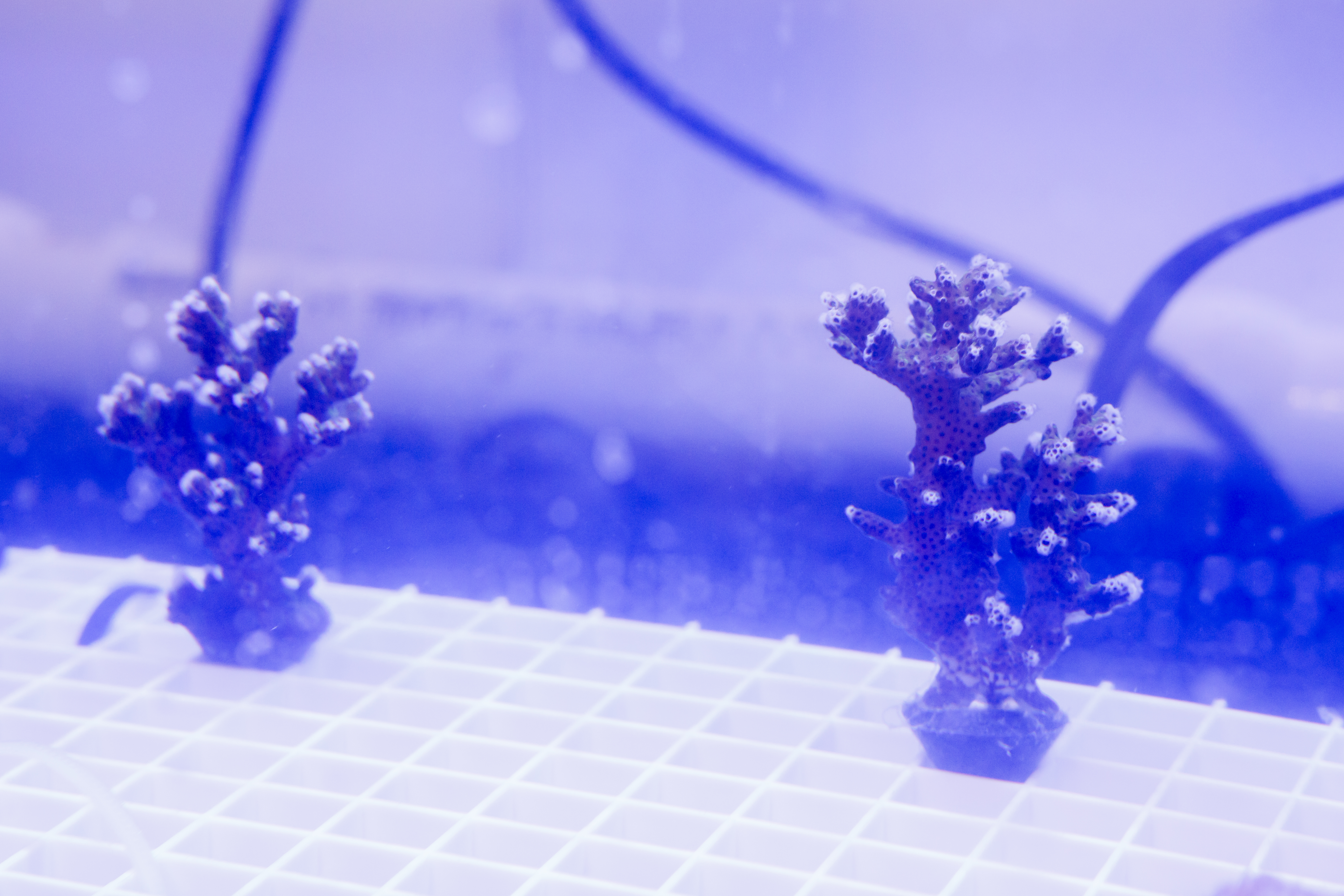

When coral arrive at IU, they spend time in a “mother tank” so they can acclimate to van Kessel's lab. They only grow 5 to 6 centimeters a year but are considered a fast-growing coral. Photo by James Brosher, Indiana University
  • Faculty + Staff Intranet

Department of Biology social media channels

  • Twitter
  • Facebook
  • College of Arts & Sciences
  • Department of Biology

The College of Arts & Sciences

  • About
    • Message from the Chair
    • Faculty
      • Tenured + Tenure-Track Faculty
      • Teaching Faculty
      • Research Scientists
      • Retired and Emeriti Faculty
      • Faculty Affiliates
    • Research Associates & Postdocs
    • Staff
    • Graduate Students
    • Administration
    • Offices & Centers
    • Outreach
      • K-12 Educators
        • Biology Summer Institute
      • K-12 Students
        • Holland Summer Science Programs
          • Jim Holland Summer Enrichment Program in Biology (SEP)
          • Jim Holland Summer Science Research Program (SSRP)
          • Jim Holland Research Initiative in STEM Education (RISE)
      • Lessons
      • Outreach Activities
      • Outreach Coordinators
    • History
      • Faculty Emeriti
      • Historical Materials
    • About Bloomington
  • Undergraduate
    • Biology
      • Biology Learning Goals
      • Biology B.S.
        • Areas of Concentration
          • Biology of Disease
          • Cell Biology and Molecular Genetics
          • Integrative and Organismal Biology
      • Biology B.A.
      • Biology Minor
    • Biotechnology
      • Biotechnology Learning Goals
        • Biotechnology BS Learning Goals
        • Biotechnology BA Learning Goals
        • Biotechnology Minor Learning Goals
      • Program Design & Resources
      • Biotechnology B.S.
      • Biotechnology B.A.
      • Biotechnology B.S./M.S.
      • Biotechnology Minor
      • Demand and Employment Analysis
    • Microbiology
      • Microbiology B.S.
      • Microbiology B.A.
      • Microbiology Minor
    • Molecular Life Sciences
    • Research & Teaching Opportunities
      • Research Programs
      • Biology X490 Independent Study
      • Undergraduate Teaching Assistant
    • Honors Program
    • Advising
    • Awards & Scholarships
    • Student Experience
    • Graduate & Professional Program Preparation
    • Career Preparation
  • Graduate
    • Evolution, Ecology, and Behavior Ph.D.
      • EEB Admissions
      • Curriculum
      • EEB Faculty
    • Genome, Cell, and Developmental Biology Ph.D.
      • GCDB Admissions
      • Curriculum
      • GCDB Faculty
    • Microbiology Ph.D.
      • Microbiology Admissions
      • Curriculum
      • Microbiology Faculty
    • Biotechnology M.S.
      • Biotechnology Admissions
      • Program Plan + Curriculum
      • Financial Support
      • Biotechnology Faculty
    • Multidisciplinary & Affiliated Programs
    • Advising
    • Financial Support
    • Awards & Fellowships
    • Life Assistance
    • Career Preparation
    • Alumni Career Spotlights
    • How to Apply
      • Ph.D. Admissions
      • M.S. Admissions
  • Research
    • Research Faculty
    • Associated Research Faculty
    • Research Strengths
      • Behavior
      • Chromatin, chromosomes, and genome integrity
      • Developmental mechanisms and regulation in eukaryotic systems
      • Ecology
      • Eukaryotic cell biology, cytoskeleton, and signaling
      • Evolution
      • Genomics and bioinformatics
      • Microbial cell biology and environmental responses
      • Microbial interactions and pathogenesis
      • Plant molecular biology
      • Virology
      • Neurobiology
    • Centers, Instrumentation, & Resources
      • Drosophila Research Resources
    • Faculty Awards
  • News & Events
    • News
    • Events Calendar
    • Seminars
    • Named Lectures
      • Distinguished Alumni Award Lecture
      • James P. Holland Lecture Series
      • Carlos O. Miller Lecture Series
      • Hermann J. Muller Award Lecture Series
      • Norman R. Pace Lecture Series
      • Tracy M. Sonneborn Lecture Series
      • Joan Wood Lecture Series
    • Discussion Groups & Journal Clubs
    • Annual Microbiology Retreat
      • Micro-lympics
      • Registration
    • Newsletters
      • BioNews Fall 2022
      • BioNews Archive
  • Alumni & Giving
  • Contact
  • Student Portal
    • Undergraduate
      • Biology
        • Biology B.S.
        • Biology B.A.
        • Biology Minor
      • Biotechnology
        • Biotechnology B.S.
        • Biotechnology B.A.
        • Biotechnology B.S./M.S.
        • Biotechnology Minor
      • Microbiology
        • Microbiology B.S.
        • Microbiology B.A.
        • Microbiology Minor
      • Molecular Life Sciences
      • Courses
        • Biology Exemption Exams
        • Course Scheduling
        • Course Evaluations
        • Biology X490 Independent Study
        • FAQs
      • Advising
      • Research Opportunities
      • Teaching Assistants
      • Honors Program
        • Eligibility
        • Honors Courses
        • Honors Thesis
        • Honors Faculty Advisors
        • How to Apply
      • Internships
    • Graduate
      • Evolution, Ecology, and Behavior Ph.D.
      • Genome, Cell, and Developmental Biology Ph.D.
      • Microbiology Ph.D.
      • Biotechnology M.S.
      • Multidisciplinary and Affiliated Programs
      • Courses
      • Transfer credits
      • Awards + funding
      • Financial Support
      • Teaching Support
      • Dissertation & Thesis Support
      • Services & Outreach
      • Submit News to Biology
      • Facilities & Resources
        • Computing Services
        • Constant Temperature Rooms
        • Dry Ice
        • Lactation Room
        • Room Reservations
          • All Rooms
          • Biology Bldg. 123
          • Biology Bldg. 248
          • Biology Bldg. A310
          • Biology Bldg. 422
          • Biology Bldg. 510
          • Myers Hall 115
          • Myers Hall 140
          • Myers Hall 209
          • Myers Hall 311
      • Student Academic Appointments
      • Conflict Resolution + Incident Reporting
    • Seminars
    • Ombudsperson
  • Donate

The College of Arts & Sciences