Universities are at the forefront of making basic bioscience discoveries that form the cornerstone of society’s most innovative and life-changing drugs and biotechnology. But Indiana University isn’t content to stop there. Its institutional dedication to harnessing faculty’s appetite for innovation and moving beyond discovery to execution is driving research directly into the hands of people who need it the most.
That research includes treatments for obesity and substance-use disorders; better diagnostics for breathing disorders in young athletes; and antibiotic resistance in aquaculture. With IU’s flourishing start-up ecosystem—and unrivaled funding commitments in the biosciences, totaling more than $400 million in recent years—this research can move from laboratory to market, where it is solving real-world problems for real people.
The university goes beyond financial support by facilitating faculty collaboration, sustaining infrastructure, and advancing industry partnerships to accelerate scientific discoveries aimed at improving human health. Pioneering researchers and start-up founders like National Inventors Hall of Fame inductee Richard DiMarchi bring their passion for exploration to IU in part because the university provides the backing and the independence needed to advance life-changing research.
IU’s Launch Accelerator for Biosciences, or IU LAB, plays a crucial role driving start-up activity at IU, serving as a front door for industry partners seeking to connect to the university’s more than $1 billion research enterprise. It’s home to a cluster of programs designed to nurture a global cohort of bioscience innovators and catalyze talent developments to address today’s most pressing health challenges.
Turning ideas into enterprise
Rita Patel, an IU researcher advancing wearable technology to improve the health and safety of young athletes, got a crash course in the world of entrepreneurship via IU LAB.
Patel took part in the IU Health Incubator at IU LAB Pre-Accelerator powered by gener8tor’s gBeta program, which connects early-stage companies—sometimes those just in the product or prototype stage—with mentors, industry experts, and investors.
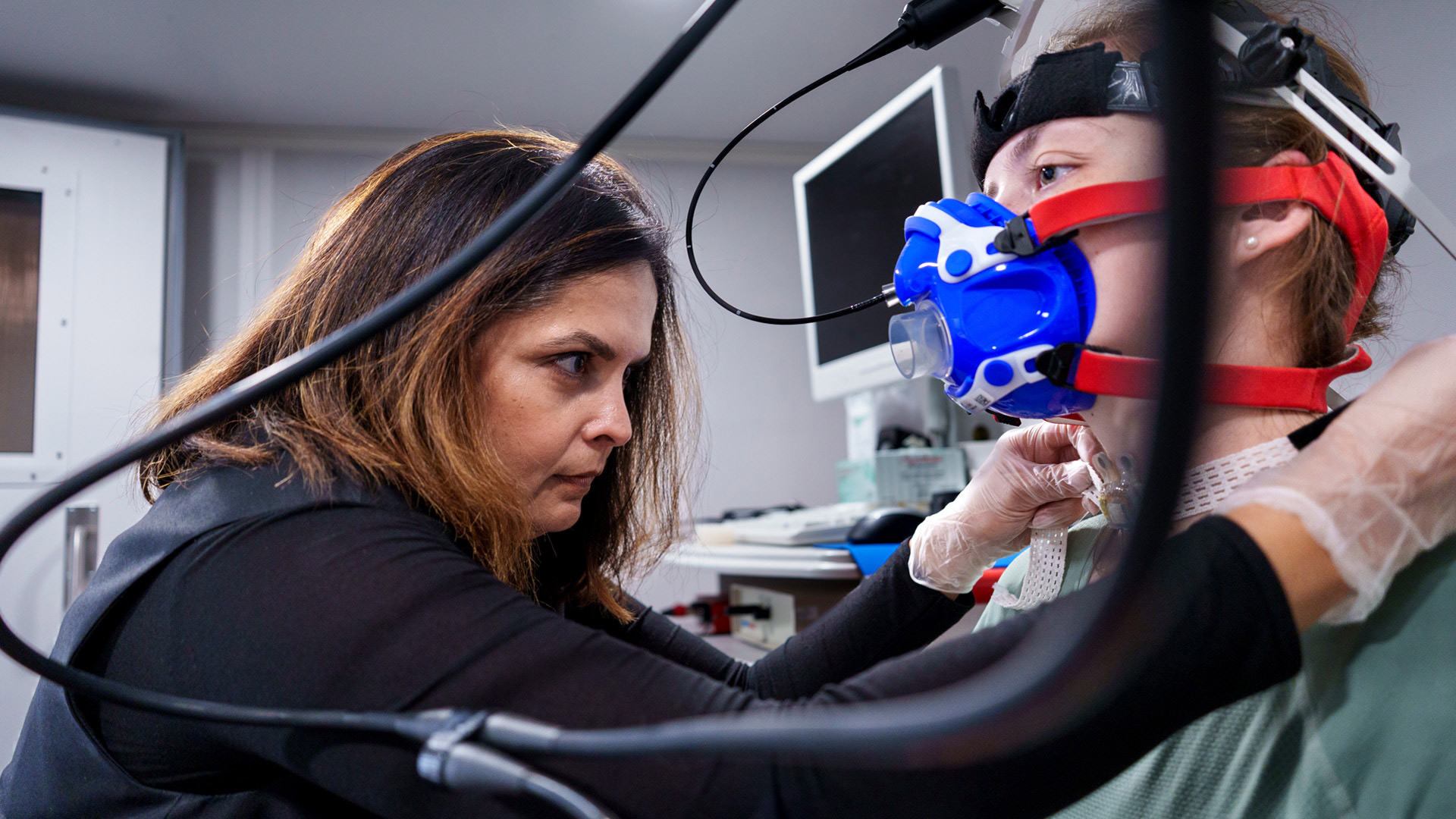
An expert on voice and upper-airway disorders, Patel is the founder of Aerly Diagnostics, which aims to create a wearable device for the real-time detection of exercise-induced laryngeal obstruction, a difficult-to-diagnose breathing disorder that affects an estimated one in four teenage athletes.
“I had a device I knew could help patients, but I didn’t know anything about start-ups,” Patel says. “But if you’re only doing it in the lab, you can’t scale it to everyone who might need it. A company helps us reach the market. It opens up a much wider door for access than we can do on our own in the lab.”
The IU LAB Pre-Accelerator program helped Patel envision a life for her product beyond the lab. She knew how to do the research, but the one-on-one training taught her to think like an entrepreneur.
Patel said the gBeta program also introduced her to Indiana-based organizations that could support her business, such as a start-up with the design and manufacturing expertise that could move her prototype closer to a consumer-grade product in a shorter amount of time.
Integrating start-ups into the educational experience
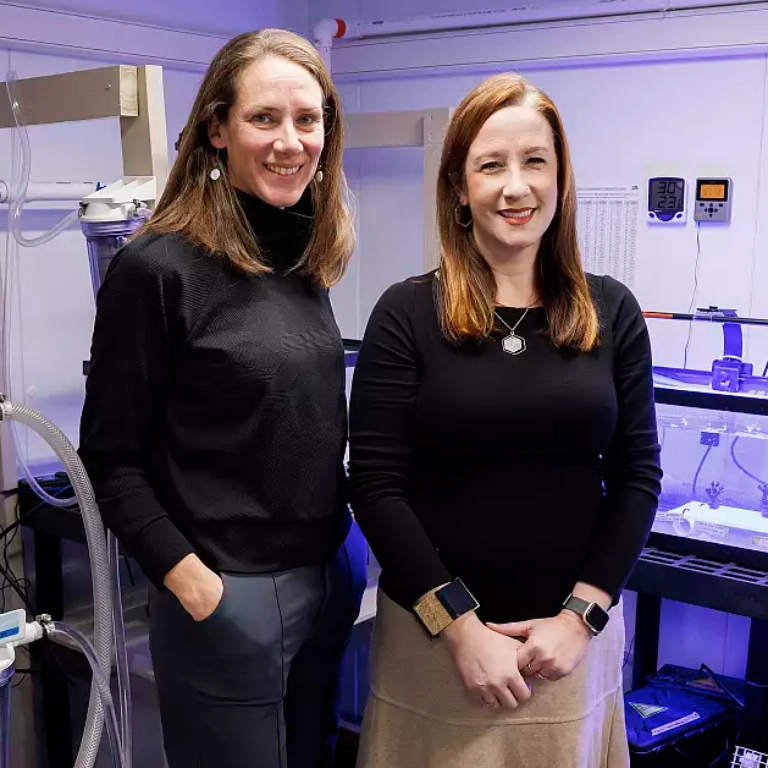
IU science professors Julia van Kessel and Laura Brown are waging a battle against pathogens that pose threats to marine and human health. In 2023, they cofounded a start-up company, Quornix, to bring their infection-fighting molecules to market.
Quornix disrupts communication in marine pathogens that attack shrimp, a key source of protein in the aquaculture market. Van Kessel hypothesizes that by interrupting the ways these bacteria communicate, infection could be treated or prevented without the use of antibiotics.
Quornix’s CEO and principal investigator is Chelsea Simpson, whose love for both the business and research sides of working at a biotech start-up comes from a desire to solve problems in real life. After earning the IU Kelley School of Business’s Executive Certificate in the Business of Life Sciences, she connected Quornix to George Telthorst, director of the Kelley School’s Center for the Business of Life Sciences.
Each semester, he chooses a local bioscience start-up to work with students in his course called “The Life Sciences Industry from Research to Patient.” Recently, the class provided marketing and business guidance to Quornix.
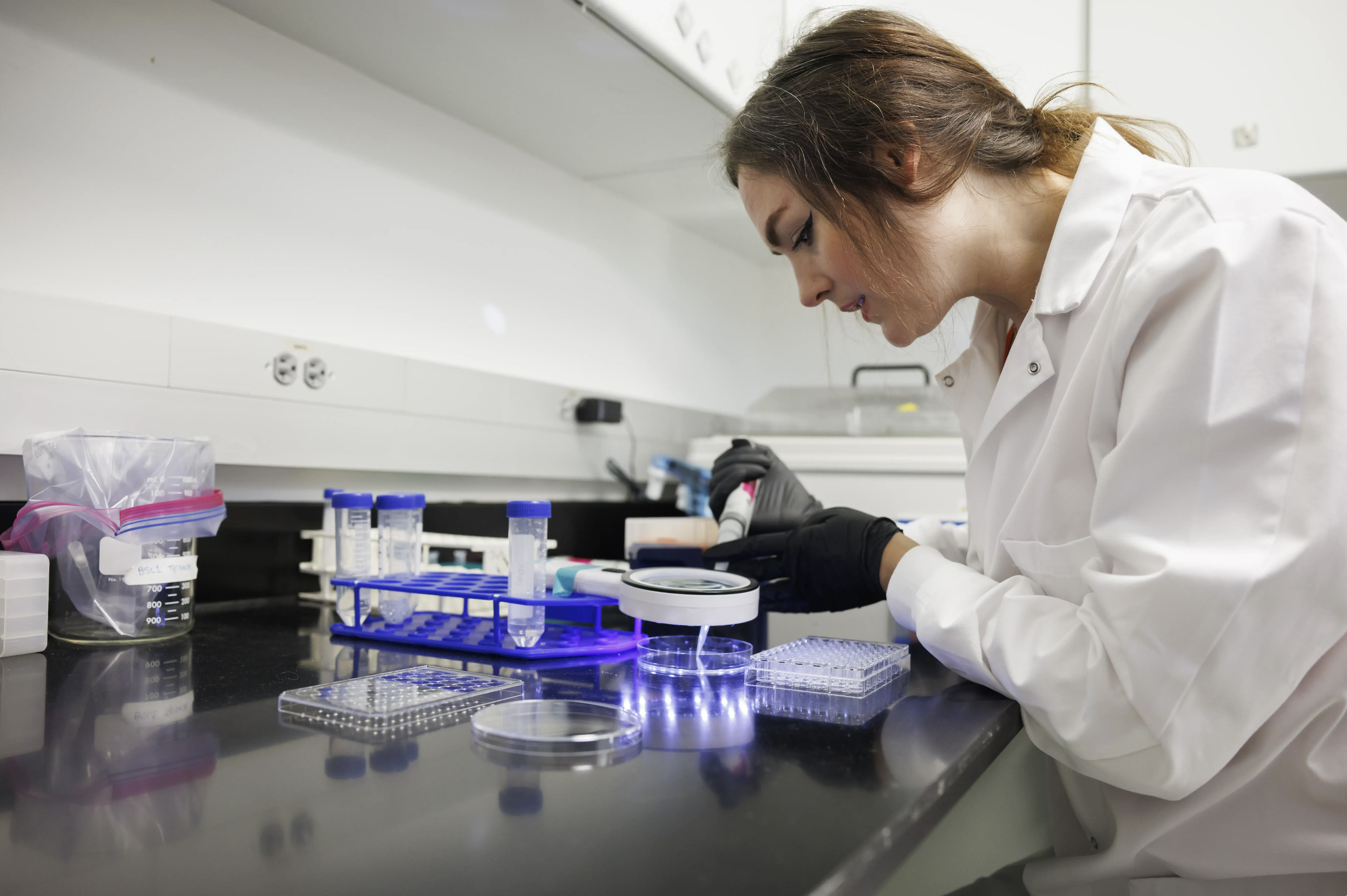
By continuing to connect their research into coursework at IU, the Quornix leaders hope to find human applications for their award-winning work while providing students the hands-on experiences they need to thrive in the workforce.
Tapping into the future
Relate XR, a start-up cofounded by IU faculty member Brandon Oberlin and IU alumnus Andrew Nelson, uses virtual reality technology to treat substance-use disorders by introducing individuals in recovery to their “future selves.” The company’s CEO is Izzy Branam, an IU alumnus with substantial entrepreneurial experience.
What brought them together are the people, programs, and offices that fall under the umbrella of IU Innovates, a university initiative that supports entrepreneurship, innovation, and commercialization at IU.
Relate XR was founded because Oberlin was looking for a partner who could turn his research on the power of “future-self avatars” in the addiction-recovery process into an experience available to people in early recovery.
Through the technology, individuals in recovery experience a realistic digital representation of their future selves who speak in their own voice about fulfilling personal goals and ambitions. Oberlin and Nelson lacked the time and the expertise to take their technology to market. After an introduction facilitated by the IU Innovation and Commercialization Office, Branam came on board to help the company pursue FDA clearance and a strategy to obtain coverage through healthcare reimbursement.
Now, Oberlin continues to collect data on using the avatars in the recovery process, and the product is in active clinical trials. Relate XR is working with regulators so that when the technology comes to market, it will be FDA-approved.
Oberlin said that many of the recovery-related products in the wellness market are not supported by evidence.
“Our goal is to make something that is supported by strong, objective evidence found in data collected in clinical trials,” Oberlin says. “But I am an academic. I am devoted full-time to teaching and to research. So I appreciate the assistance that IU has provided for our entrepreneurial efforts. It would have been almost impossible to get as far as we have without their help.”
 The College of Arts